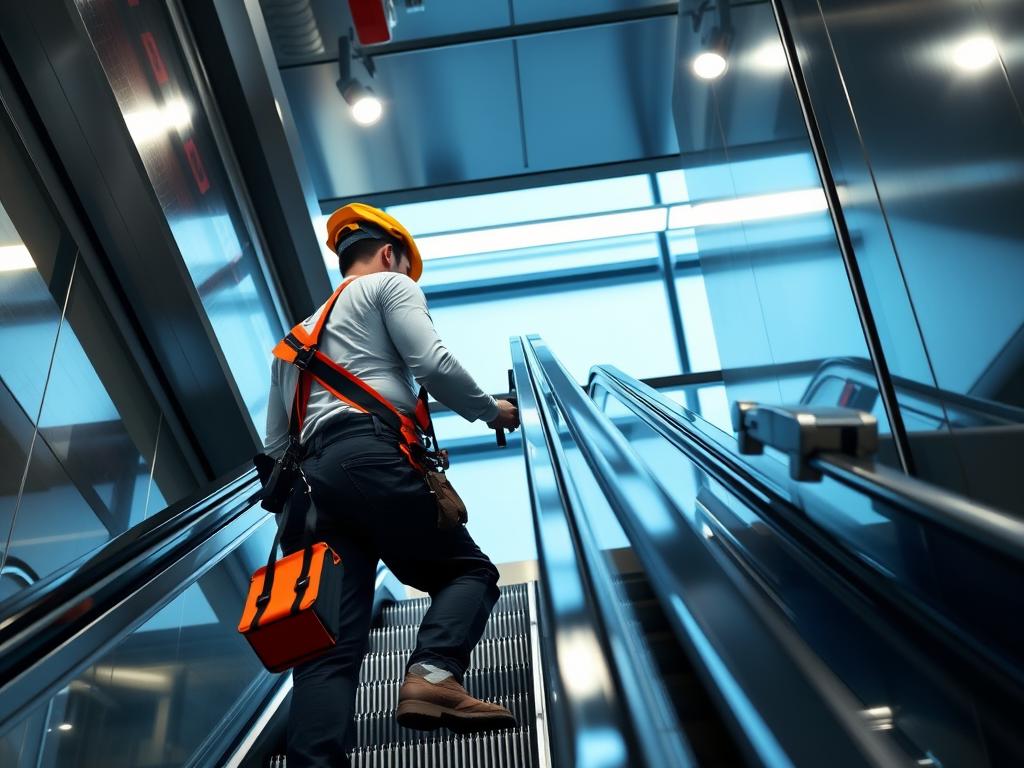
Why Elevator WC Rates Are Higher Than Most Construction Trades
Workers compensation rates are set by the NCCI (National Council on Compensation Insurance) based on historical injury data by classification code. Elevator installation and repair (Code 5160) has one of the highest base rates in the construction classification system — higher than most commercial construction trades.
This reflects the genuine injury profile of the work:
- Falls in elevator hoistways and pits
- Crush injuries from counterweights, drive systems, and moving components
- Electrical shock during testing, commissioning, and troubleshooting
- Musculoskeletal injuries from working in confined hoistway spaces with awkward body positions
- Struck-by hazards from overhead work in active lobbies
The good news: there are legitimate ways to reduce your WC costs without gaming the system or underpaying your workers.
NCCI Classification Codes for Elevator Contractors
The classification code on your WC policy determines your base rate. Getting the right codes matters — both over-classification and under-classification create problems.
Code 5160 — Elevator Installation and Repair This is the primary code for elevator mechanics doing installation, modernization, or maintenance and repair work. It carries a high base rate reflecting the industry's injury profile.
Code 5190 — Electrical Wiring Within Buildings Some elevator modernization work — particularly control system upgrades and wiring — may qualify for Code 5190, which typically carries a lower rate than 5160. Whether specific operations qualify depends on the carrier and state.
Code 5537 — HVAC Not applicable to elevator work — mentioned here because some agents incorrectly use HVAC codes for mechanical system contractors. Don't let this happen.
Code 8742 — Outside Salespersons, Collectors or Messengers Office and administrative employees belong here — not at elevator mechanic rates. Every employee coded incorrectly at a higher rate costs you money.
Code 8810 — Clerical Office Employees Pure clerical staff who never go to job sites are typically rated at 8810, the lowest rate in most states.
Important: Always verify that your office and clerical employees are coded separately from your field workers. This is one of the most common overpayment errors in elevator contractor WC policies.
The Experience Modification Rate (EMR)
Your EMR is a multiplier applied to your base WC premium based on your claims history compared to the industry average. An EMR of 1.0 means you're average. An EMR of 0.75 means you pay 25% less than the base rate. An EMR of 1.40 means you pay 40% more.
EMR is calculated by your state's rating bureau (NCCI in most states) based on three years of claims data, excluding the most recent policy year. The formula weighs frequency more heavily than severity — a single large claim hurts your EMR less than multiple smaller claims.
How to improve your EMR:
- Implement a formal incident reporting system — unreported incidents become late-reported claims, which are harder to manage and often more expensive
- Work with your WC carrier on modified duty programs — getting injured workers back to light-duty work faster reduces total claim costs and positively impacts your EMR
- Contest questionable claims — not every claim attributed to your policy actually belongs there
- Review your EMR calculation annually for errors — rating bureaus make mistakes
Why EMR matters beyond WC premium: Many commercial property owners, GCs, and facility managers won't award contracts to elevator contractors with an EMR above 1.0 or 1.1. A high EMR can cost you contracts worth far more than the WC savings from improved safety.
Owner Exclusion Options
In most states, business owners (sole proprietors, partners, officers of closely-held corporations) can elect to exclude themselves from the WC policy. This means:
- You don't pay WC premium on your own salary
- If you're injured, you're not covered by the WC policy (you'd rely on health insurance or personal disability)
When to elect exclusion: If you have health insurance and disability coverage, and you're working in a supervisory or administrative capacity that reduces your personal injury exposure, exclusion often makes financial sense.
When NOT to elect exclusion: If you're an owner-operator doing field work alongside your crew, WC coverage for yourself may be worth the premium.
State variations: Arizona, California, and several other states have restrictions on owner exclusions. We'll walk through your specific state's rules during the quoting process.
Multi-State Payroll Issues
If your crews work across state lines — common for elevator contractors doing commercial properties in metro areas that cross state borders — your WC policy needs to address multi-state exposure.
Standard WC policies cover employees working in the states listed on the policy. If an employee works in an unlisted state, coverage may not apply.
Solutions:
- List all states where your employees work on the WC policy
- Add an "Other States" endorsement that provides coverage in any state not specifically listed
- Consider separate policies for states with high premium volumes or state fund requirements (Ohio, Wyoming, Washington, North Dakota, and a few others operate state-exclusive WC funds)
What WC Pays — and What It Doesn't
WC covers: medical treatment for work injuries, lost wages during recovery, permanent disability benefits, death benefits to survivors, employer liability for third-party over/under suits.
WC does NOT cover: employees injured while commuting to/from work, contractors you misclassify as employees if they don't meet the legal standard, intentional injuries, injuries from horseplay or intoxication (in most states).
The 1099 vs W-2 issue: Some elevator contractors use 1099 subcontractors for occasional overflow work. In most states, if those subs don't have their own WC policy, your policy may cover their injuries — and you pay the premium. We help you structure your policy correctly for your actual workforce.
Cost Ranges for Elevator WC
WC premium is calculated as: (payroll / 100) × rate × EMR. Rates vary by state and classification code.
Approximate ranges (Code 5160, EMR 1.0):
- Solo mechanic, $80K payroll: $4,000–$9,000/year
- 3-person crew, $250K total payroll: $12,500–$27,000/year
- 10-person company, $800K total payroll: $40,000–$85,000/year
These are approximate — actual rates depend on state, carrier, and your specific EMR.
Getting the Right WC Quote
The WC market for elevator contractors is specialized. Not every carrier will write Code 5160, and not every carrier has competitive rates for elevator work. We work with admitted and E&S markets that specifically understand this class.
Call 844-967-5247 to get a proper WC quote — we'll review your classification codes, your EMR history, and your multi-state exposure before we bind.